
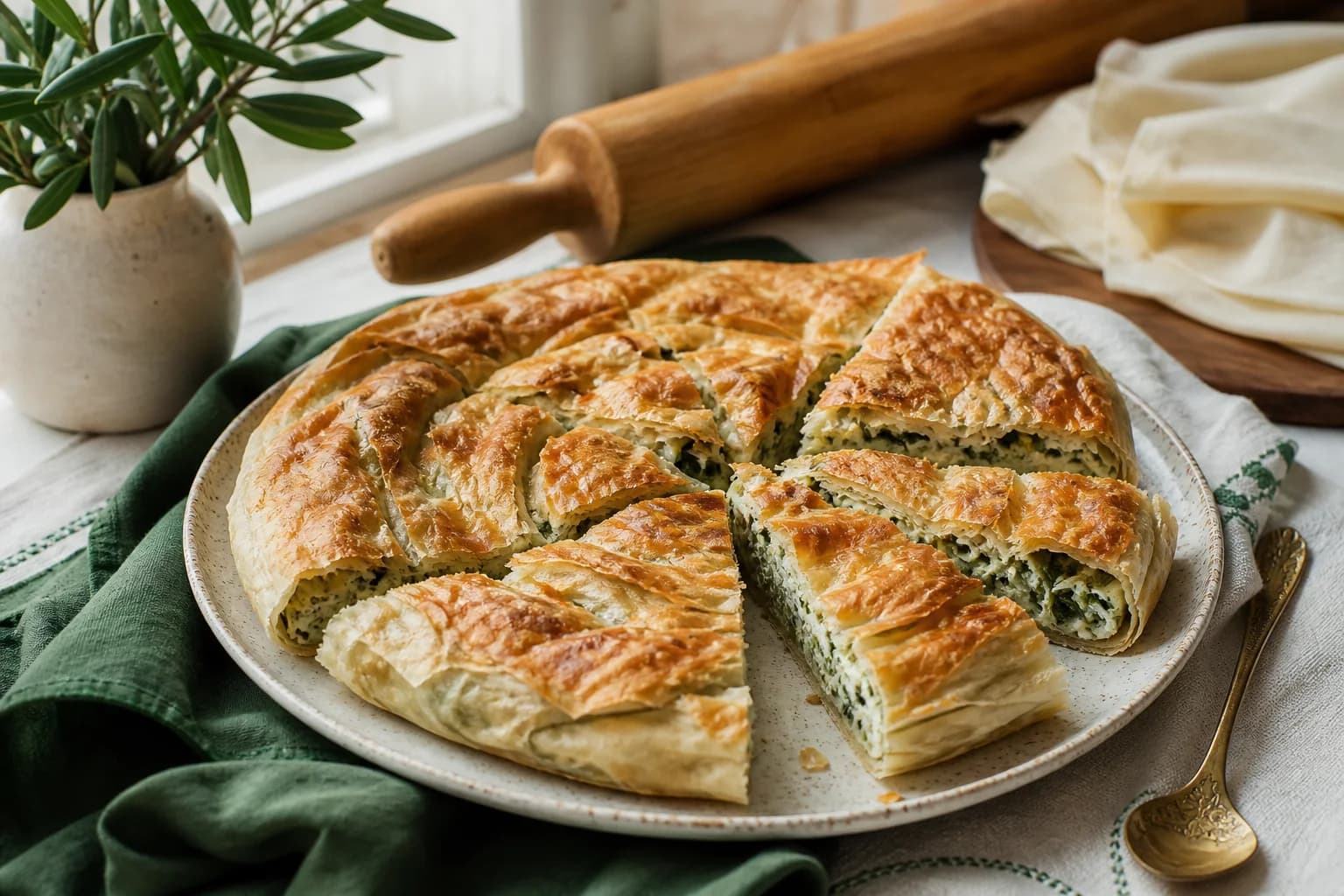
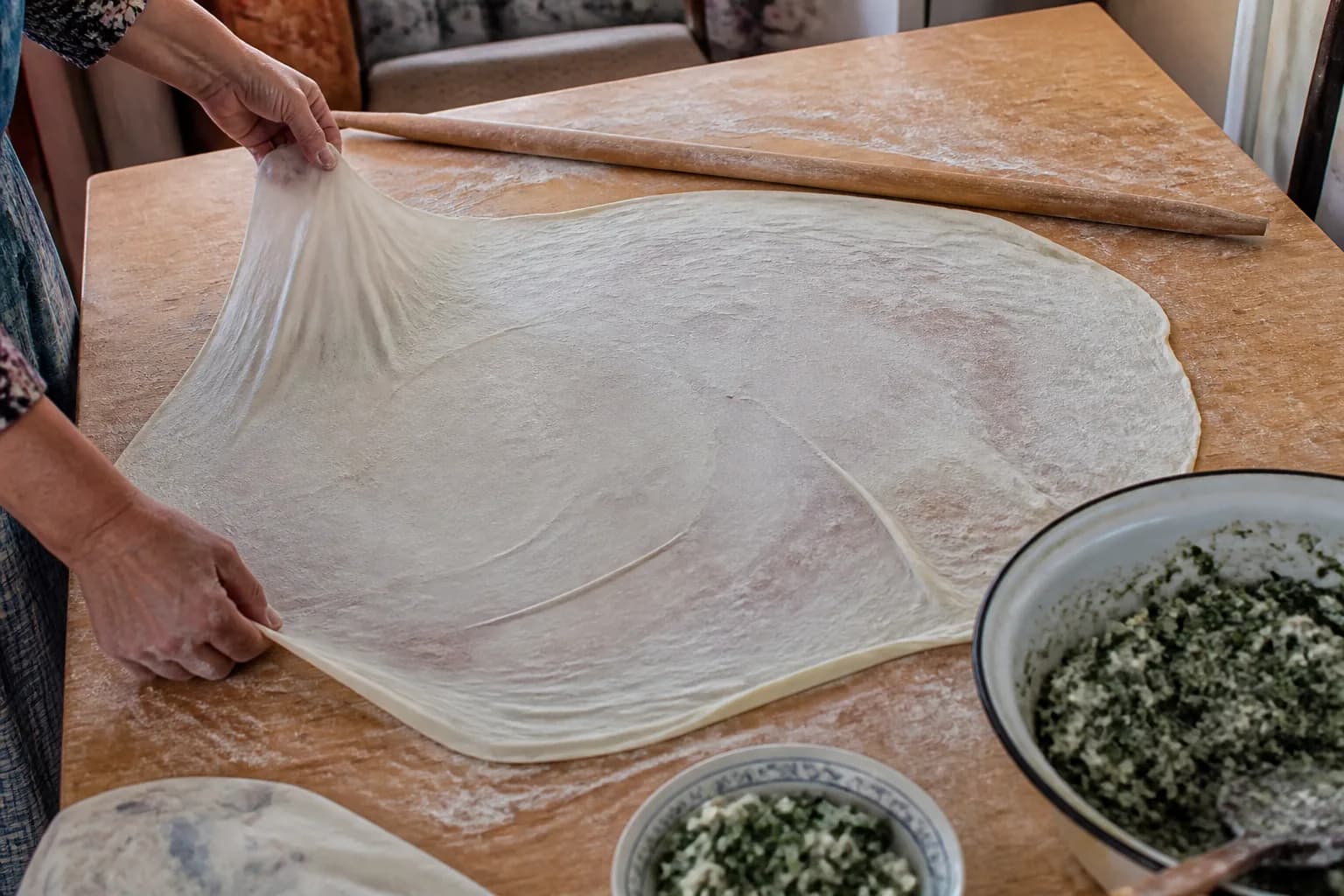
Thin dough that can still hold its filling
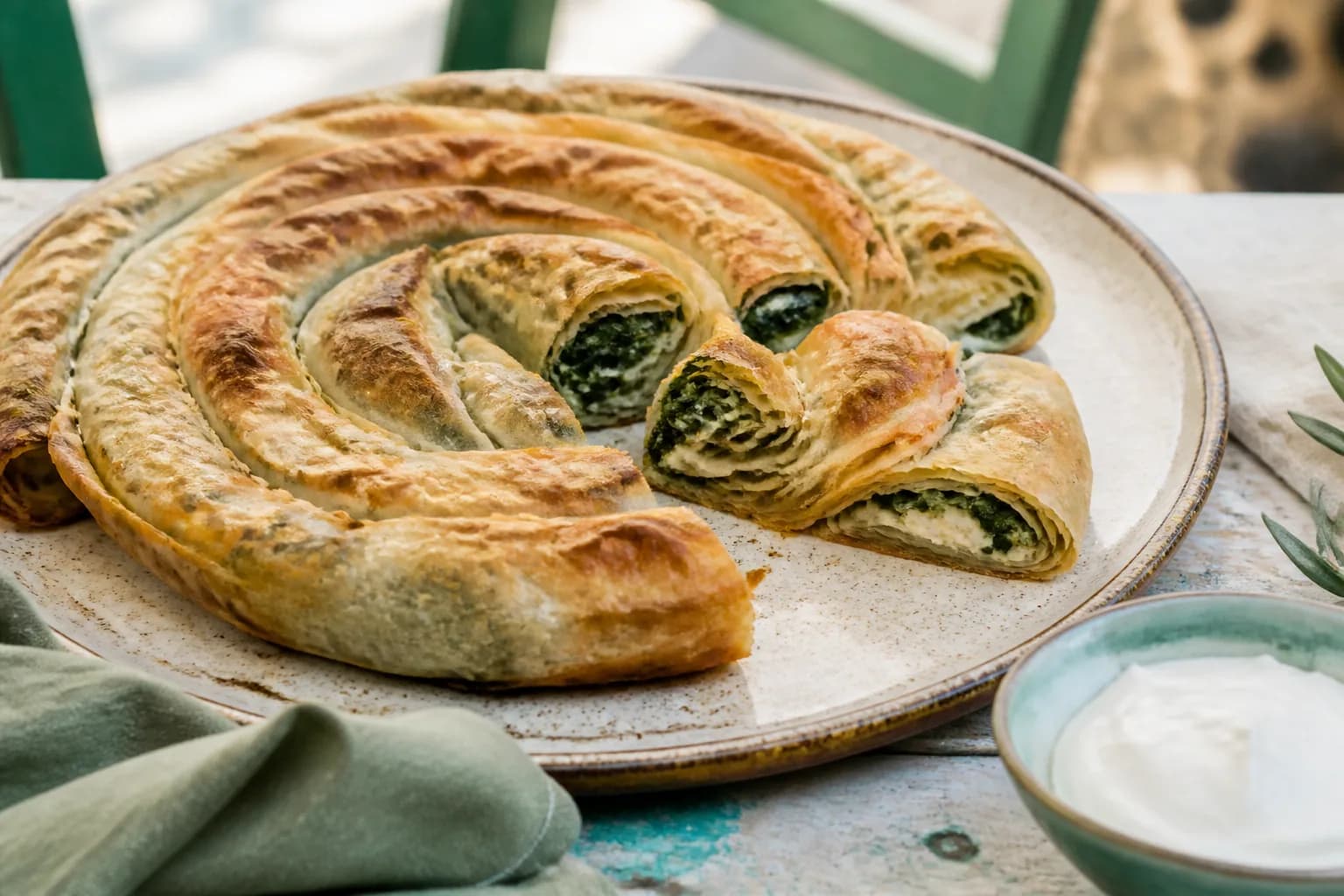
The dough should be rolled thin while remaining elastic enough to carry the filling. After baking, the layers should be visible; the surface may be crisp, but the inside should not feel dry.
Small variations in shape are natural. They are part of the character of a pastry prepared by hand rather than a defect that needs to be removed.
The filling should not overwhelm the dough
Whether the filling contains cheese, minced meat, potato or herbs, its moisture and fat need to be balanced. Too much liquid softens the dough, while an overly dry filling breaks the harmony of the pastry.
- Thin layers that can be seen after baking
- A balanced proportion of dough and filling
- A coloured exterior with a tender interior
- Warm service or careful handling that protects freshness
Aroma, texture and freshness
Fresh borek should carry the clean aroma of its filling and cooking fat. The dough should separate into layers rather than leave a thick, greasy coating in the mouth.
Even a well-made pastry loses texture when it waits too long, so timing and service are as important as the written recipe.
Why fidelity to the recipe matters
Traditional recipes carry more than a list of ingredients. Resting time, rolling technique, the preparation of the filling and oven temperature are all part of the knowledge passed between generations.
Our guides document regional food culture in a clear and useful way. Seasonal dishes and current service details may change over time.